
Cost of Studying in Bishkek in 2026: Tuition and Living Costs Explained
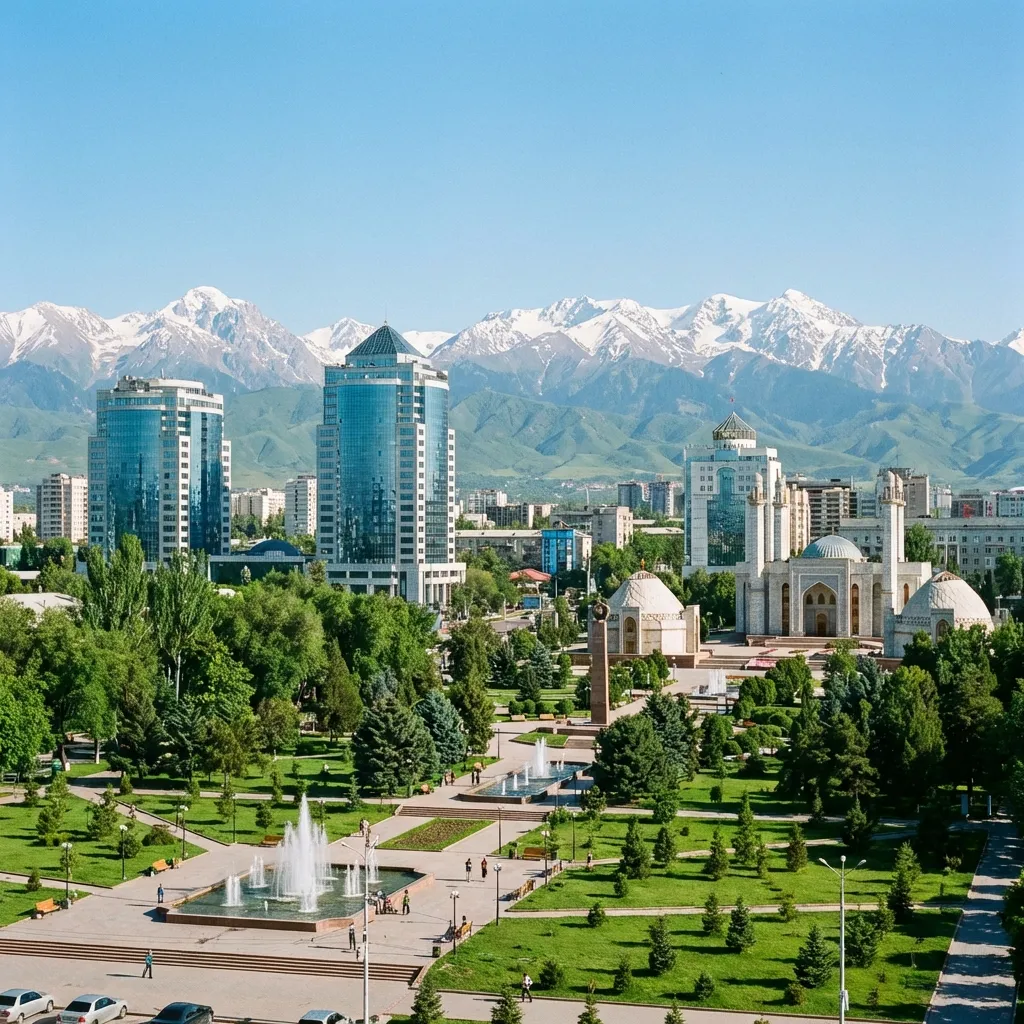
A realistic budget for an English-taught degree in Bishkek — how tuition compares, what rent and daily life cost, and what a founding-cohort student at ACLAS actually pays per year.
Tuition is only part of the price of a degree. Rent, food, transport and fees together decide whether a study destination is genuinely affordable, and on that full measure Bishkek is one of the most accessible capitals in the region for an English-taught bachelor's degree. This article breaks down the real numbers for 2026 — tuition, living costs and the total annual budget — using published fees and widely used cost-of-living estimates, and flags where the figures are estimates rather than guarantees.
Start with tuition. English-taught bachelor programs in Kyrgyzstan generally sit in a band of roughly USD 2,200 to USD 4,300 per academic year, depending on the institution and field, with established international universities in Bishkek clustering toward the upper part of that range. ACLAS publishes founding-cohort tuition of USD 2,800 per year for international students and USD 1,800 per year for students resident in Kyrgyzstan and Central Asia — the lower-middle of the English-taught market, with an international curriculum design.
The founding scholarship changes the effective price further. Every student admitted to the founding cohort receives a 25% Founding Scholars scholarship, so net tuition is USD 2,100 per year for international students and USD 1,350 for regional students; a limited number of 50% excellence awards are available to top applicants. Scholarship amounts are confirmed in the offer letter, and fees are payable in Kyrgyz som at the National Bank (NBKR) rate on the payment date.
Rent is the largest living expense. Cost-of-living data published by Numbeo (July 2026) puts a one-bedroom apartment in Bishkek's city centre at roughly USD 574 per month, and outside the centre at roughly USD 396. Most students pay considerably less per person by sharing an apartment or choosing student-oriented housing, which is why typical total monthly budgets are lower than these headline rents might suggest.
Beyond rent, daily life in Bishkek is inexpensive by regional standards: local groceries and markets, bus and marshrutka fares, utilities and mobile internet are all modest. Combining shared rent with food, transport and personal expenses, students typically budget an estimated USD 300–500 per month excluding tuition. Students who cook at home and live outside the very centre tend toward the lower end; those renting alone in the centre should plan above it.
Adding the parts together gives the honest annual picture. An international student at ACLAS should plan on tuition of USD 2,800 plus living costs of roughly USD 3,600–6,000 across a twelve-month year — a total of about USD 6,400–8,800, or USD 5,700–8,100 after the founding scholarship. A student from Kyrgyzstan or Central Asia pays USD 1,800 in tuition (USD 1,350 net) plus the same living budget if living away from home. Few English-taught degrees anywhere come close to that total.
Three caveats matter. First, Numbeo figures are crowdsourced estimates, not official statistics, and individual costs vary with lifestyle and neighbourhood. Second, because fees are paid in Kyrgyz som at the National Bank rate, dollar figures move slightly with exchange rates. Third, tuition is set for the founding cohort and published on the ACLAS tuition page, which is the authoritative source if numbers ever differ. Used with those caveats, the conclusion is robust: Bishkek offers an English-taught degree at a total annual cost that undercuts almost every comparable destination.